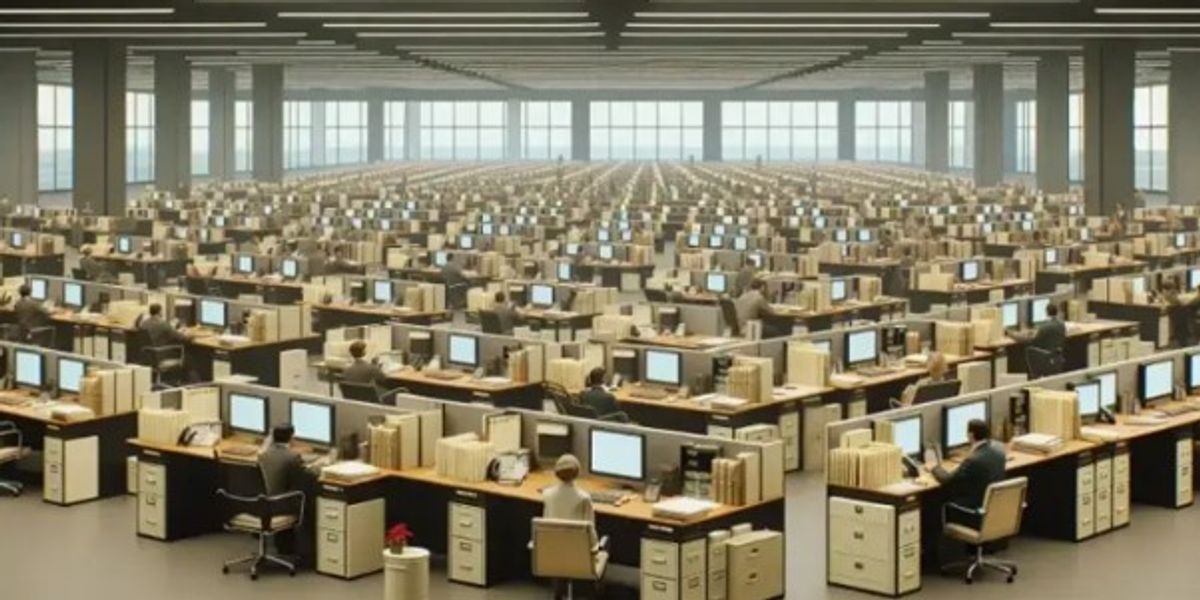
In this article David Cantrick-Brooks (Principal & Director, Governance in Action) and Christine Chan (Senior Company Secretary, Jardine Matheson, Hong Kong) explore the topic of filing systems in company secretarial practice.
We all know how frustrating and very time-consuming it can be to not find a critical document, especially one that is requested at short notice by a director or senior executive, and you have the least amount of ‘spare’ time to start looking for it!In days gone by, when documents were predominantly printed and filed in a secure compactus by an executive assistant whose job it was to keep the filing up to date, finding a document was on the whole fairly easy, providing the filing system was good and the filing kept up to date (in the right places).These days, however, with diminished budgets and resources and dramatic changes in technology, we generally no longer have documents methodically stored in hard copy form (which has some positives and negatives of course).Instead, we create and receive documents almost exclusively in soft copy form, which can present its own challenges.First, the filing system must be secure, logical and easy to use.In my experience, electronic filing systems tend to evolve over time, as people in the team come and go, each bringing their own views, preferences and interpretations of what to call something and where to file it, sometimes unwittingly giving rise to duplicate folders and documents (because someone can’t find the relevant folder and so creates another folder, not realising that one already exists somewhere else in the system), and naming documents in ways that are vague, imprecise or otherwise unhelpful, which can make the job of finding something extraordinarily difficult, time-consuming and frustrating (for everyone).Second, there needs to be discipline in following the filing instructions (for everyone’s sake – short-term and long-term), including filing things as you go along (rather than waiting until there is a quieter moment to do this seemingly less important work).Third, access to folders must be restricted to those who really need it (regardless of seniority).Fourth, the login details must be kept secure at all times.Fifth, be alive to cybersecurity issues and take appropriate precautions (including checking to see if documents contain any viruses before opening and saving them).Talk to your IT team if you are unsure.Sixth, like hard copy files, don’t forget to archive old documents appropriately.Seventh, be careful with any documents that are private and confidential and subject to legal professional privilege.Security classification can be incredibly important.Create a procedure which promotes both clarity and consistency.
It should be noted that electronic filing systems are widely recognised as being far superior to manual filing systems in many ways, as we discovered during COVID-19 (including the ease of filing and searching for documents, not to mention the massive savings in physical space and stationery-related expenses).However, I’m sure that we’ve all experienced situations where an email or document cannot be found even though we are certain it exists.This is especially true of emails and documents in Outlook, which is why dedicated document management systems are so much better.However, it’s acknowledged and accepted that most dedicated document management systems are not inexpensive, which is why so many company secretary functions use and rely upon tightly controlled shared drives and/or SharePoint (with restricted access for key stakeholders).
Be aware that filing systems should be appropriate for the current and anticipated future needs of the organisation, including how those systems interact with other systems (such as an entity management system and/or board portal, etc.).
Here are some helpful hints and tips:
- Create a clear and logical folder structure, with detailed instructions / procedures on how to file things (the less room for doubt the better).Spend the time to discuss this with new team members during the onboarding process.This is also important where dedicated and sophisticated document management systems are in use.Invest the time!
- Avoid deep layering of folders (try to keep the filing structure as shallow as possible), also noting that issues can arise with very long file paths (including when saving and uploading documents in some systems).
- Use accurate, descriptive and apt filenames (including a reference as to whether, for example, the document is draft or final, signed or unsigned and whether any special security classification applies).Be as economical as possible with filenames.Long filenames can cause issues (refer previous point).
- Add version control number suffixes – in sequential order (e.g. v1.0, v1.1, v1.2, v1.3, etc.).The importance of version control cannot be overstated.
- Add password protection to documents if necessary (e.g. a restricted board paper), however keep a safe record of such passwords.
- If starting from scratch or reconfiguring an existing system, think about the common categories of documents based on activity (e.g., governance, directors, shareholders / members, meetings, transactions, lodgements, resources, administration, etc.) and how someone might typically go about finding them.
- Map out a file / folder structure on paper (and don’t be afraid to brainstorm this with colleagues, who will feel they own the system as well).
- Regularly review who has access to the folders.
- Regularly review and archive or delete old records in line with the organisation’s policy on retention and disposal of records.
- Include filing systems in DRP / BCP testing.Consider what would happen if you could not access documents electronically.
If your budget permits, there are some very good off-the-shelf systems available, although they may take some time to set up.
Share your thoughts … and, if you haven’t already, please take ~5 minutes to participate in the online survey on filing systems – see LinkedIn post published on 15 November 2025:
https://lnkd.in/gqWDbK4P
Governance in Action Pty Ltd can assist clients in setting up and reviewing filing systems and processes to help ensure they are efficient and effective.